
Airport Cybersecurity: Essential Guide for Part 139 Facilities and FBOs
Complete guide to airport cybersecurity for Part 139 facilities, general aviation airports, and FBOs. Covers TSA requirements, critical systems, and implementation.
Teddy Cooper
11/23/202511 min read
Quick Answer
Airport cybersecurity (also called airport cyber security) protects critical aviation infrastructure—navigation aids, airfield lighting, access control, and operational technology systems—from cyber threats while meeting TSA compliance requirements. Unlike generic IT security, airport cybersecurity must balance safety, security, availability, and regulatory compliance simultaneously. Key priorities include network segmentation between IT and OT systems, multi-factor authentication, continuous monitoring, and risk-based patch management for systems that can't tolerate downtime.
Introduction: Why Airport Cybersecurity Is Different
If you manage an airport—Part 139 facility, general aviation airport, FBO—you've heard the drumbeat. TSA requirements. FAA guidance. Headlines about ransomware hitting aviation facilities.
Here's what generic cybersecurity advice gets wrong: airports aren't office buildings with fancier equipment.
Your runway lighting system doesn't care about protecting spreadsheets. Your ILS doesn't store customer data. But if either goes down during low-visibility operations, you have a safety emergency. That's the difference.
Generic IT security focuses on confidentiality—keeping data private. Airport cybersecurity focuses on availability—keeping critical systems running. When IT consultants walk in talking about automatic patching and scheduled reboots, they're thinking about computers. You're thinking about systems that aircraft depend on.
I spent 16 years as an FAA Electronic Engineer and 7 years as an Air Traffic Support Specialist, maintaining ILS and navigation aids. Before that, 17 years in military avionics. I've seen what happens when someone tries to apply office IT security to systems that were designed before cybersecurity existed. It doesn't work.
This guide covers airport cyber security specifically—not generic advice with aviation buzzwords added. Whether you're starting from scratch or trying to make sense of TSA requirements, we'll cover what actually matters for your facility.
Why Airports Face Unique Cybersecurity Challenges
Before we get into solutions, let's talk about why airport cybersecurity needs a different approach.
The IT/OT Convergence Problem
IT security protects confidentiality. OT security protects availability. That's the core tension.
Your email server stores sensitive data. If it goes offline for an hour while you patch it, people are annoyed but safe. Your runway lighting controls don't store sensitive data, but if they go offline during operations, aircraft can't land safely.
Traditional IT security practices—automatic updates, frequent reboots, aggressive patching—assume you can afford downtime. Airport OT systems can't. Apply office IT security to your ILS monitoring system, and you might take navigation aids offline. That's not acceptable.
Airport cybersecurity balances four things at once:
Safety - Systems must operate reliably
Security - Systems must resist cyber threats
Availability - Systems must be accessible when needed
Compliance - Systems must meet regulatory requirements
Generic IT consultants optimize for one or two. You need all four.
Legacy Systems Are Everywhere
Walk through any airport's technical infrastructure. Is that SCADA system controlling the fuel farm? Installed in 2005. Serial connections to navigation aids? Designed in the 1990s.
These systems work. They're reliable. But they weren't designed with cybersecurity in mind. Many run operating systems that haven't received security updates for years. Some use protocols that send data in clear text. Others have default passwords that can't be changed without breaking something.
You can't replace everything—the cost would be astronomical, and operationally, the systems are fine. Airport cyber security means protecting systems that can't be secured through traditional methods.
Infrastructure Spread Across Geography
Corporate offices put everything in one building. Airports spread infrastructure across hundreds of acres. Your ILS equipment sits at the runway approach end. Weather sensors are positioned around the airfield. Remote transmitter buildings might be miles from the terminal.
Each location needs connectivity, physical security, and cyber protection. Each is a potential entry point. Each has environmental constraints that limit what security measures work.
Regulatory Complexity You Can't Ignore
Airports operate under multiple frameworks that don't always align:
TSA - Security directives and cybersecurity requirements
FAA - Part 139 certification, Part 171 navigation aids, and upcoming cybersecurity rules
State and local - Various requirements depending on jurisdiction
Meeting one doesn't automatically satisfy the others. The landscape keeps evolving—FAA cybersecurity rulemaking is coming and will add new requirements.
Your cybersecurity program needs to satisfy current requirements while staying flexible for what's next.
Critical Airport Systems That Need Protection
Let's look at the specific systems that need cybersecurity attention. You can't protect everything equally—understanding what you're protecting helps you prioritize.
Navigation Aids
ILS, VOR, DME, NDB—these systems enable aircraft to find and land at your facility, especially when visibility is poor.
Historically, navigation aids operated in isolation. Modernization has connected many to IP networks for remote monitoring, maintenance, and data collection. That connectivity creates exposure.
Key vulnerabilities:
Serial-to-IP converters lacking authentication
Remote monitoring systems with default credentials
Network connections bypassing security controls
Legacy protocols transmitting unencrypted data
Why it matters: Compromised navigation aids could feed false information to aircraft or disrupt operations during critical flight phases. Even if attackers can't manipulate the signal directly, disrupting monitoring forces manual inspection and potentially leads to shutdowns.
For detailed coverage of navigation aid security, see our companion article on ILS and Navigation Aid Cybersecurity.
Airfield Lighting Systems
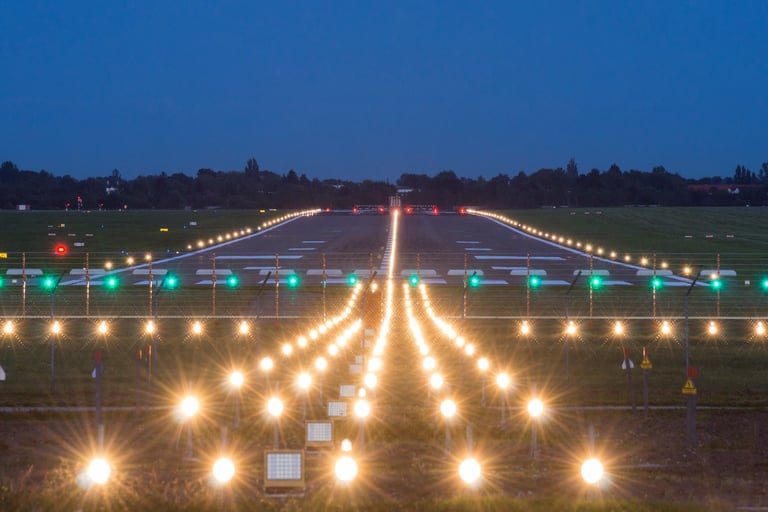
Modern airfield lighting—runway lights, taxiway lights, PAPI, and approach lighting (ALS, MALSR)—increasingly uses computerized controls: remote operation, dimming, and integration with other systems.
Key vulnerabilities:
Control systems connected to airport networks
Remote access for maintenance and operations
Integration creates lateral movement paths
Older systems with unpatched software
Why it matters: Airfield lighting is essential for safe operations at night and in low visibility. Ransomware turning off lighting controls forces airport closure.
Weather Systems
ASOS, AWOS, and related weather systems provide critical operational information. Network connectivity for data distribution and remote maintenance creates exposure.
Key vulnerabilities:
Network connectivity for data transmission
Remote access for calibration and maintenance
Integration with flight information systems
Sensor networks across the airfield
Why it matters: Weather information directly affects flight safety decisions. Manipulated data leads to dangerous choices. Even simple disruptions lead to less accurate backup procedures.
Access Control and Security Systems
Badge readers, gates, door controllers—inherently networked. Video surveillance depends on network infrastructure.
Key vulnerabilities:
Large attack surface (many devices, many locations)
Integration with building systems
Remote management interfaces
Legacy systems with known vulnerabilities
Why it matters: Access control systems protect the entire facility. Compromise enables physical breaches, turns off monitoring, or gives attackers intelligence about security operations.
Baggage Handling Systems
For commercial airports, baggage handling represents complex, networked industrial control: conveyors, sorting equipment, screening integration, and tracking systems.
Key vulnerabilities:
Industrial control with legacy components
Integration with TSA screening systems
Real-time requirements limiting maintenance windows
Complex vendor relationships
Why it matters: BHS disruptions directly affect operations and the passenger experience. The 2024 Southwest holiday meltdown showed how OT failures cascade into massive disruptions.
Fuel Systems
Airport fuel farms increasingly use SCADA for monitoring and control: tank levels, pump operations, and distribution.
Key vulnerabilities:
SCADA with legacy components
Remote monitoring and control
Safety system integration
Vendor remote access for maintenance
Why it matters: Fuel disruption halts operations. Safety incidents create serious hazards. Fuel systems often connect to financial systems for billing, creating additional exposure.
Flight Information Display Systems (FIDS)
FIDS show flight information throughout terminals. Simple displays that connect to airline feeds, operational systems, and content management platforms.
Key vulnerabilities:
Network connectivity for data feeds
Content management interfaces
Integration with multiple external systems
Often lower security priority despite visibility
Why it matters: FIDS compromise has been seen in several high-profile incidents. Attackers display political messages, fake emergencies, and offensive content. Beyond embarrassment, this demonstrates network access.
Business and Administrative Systems
Email, financial systems, employee records, operational databases. These face the same threats as any business, but with additional implications.
Key vulnerabilities:
Standard IT vulnerabilities (phishing, ransomware, etc.)
Integration with operational systems
Sensitive data (employee information, security plans)
Vendor and contractor access
Why it matters: Business system compromises can spill over into operational systems. Ransomware, starting in email, spreads to control systems. Stolen security procedures benefit adversaries.
Understanding TSA Cybersecurity Requirements
TSA issued cybersecurity requirements through Emergency Amendment EA 23-01 in March 2023. These apply to TSA-regulated airport operators and establish baseline expectations.
The Four Core Requirements
1. Network Segmentation
Develop policies and controls to ensure operational technology systems can continue operating safely if information technology systems are compromised, and vice versa.
What this actually means:
Separate OT networks from IT networks
Implement firewalls between segments
Control traffic between zones
Isolate critical systems
2. Access Control
Create measures to secure and prevent unauthorized access to critical cyber systems.
What this actually means:
Implement multi-factor authentication
Use individual accounts (no shared credentials)
Apply the principle of least privilege
Manage vendor and contractor access
Remove access promptly when no longer needed
3. Continuous Monitoring
Implement policies and procedures to defend against, detect, and respond to cybersecurity threats and anomalies.
What this actually means:
Deploy security monitoring tools
Collect and analyze logs
Establish alerting for suspicious activity
Monitor OT systems appropriately (without disrupting operations)
4. Patch Management
Reduce exploitation risk by applying security patches promptly using a risk-based methodology.
What this actually means:
Inventory systems and software
Track available patches
Test before deploying to critical systems
Apply patches on a risk-prioritized schedule
Document exceptions for systems that can't be patched
Implementation Plan Requirements
Beyond the four requirements, airports must develop a Cybersecurity Implementation Plan (CIP) documenting how they'll achieve and maintain compliance.
The plan must include:
Cybersecurity policies and procedures
Roles and responsibilities
Technical control implementations
Testing and audit procedures
Incident response procedures
For detailed coverage of TSA requirements, see our companion article, TSA Cybersecurity Requirements for Airports.
Building Your Airport Cybersecurity Program
Now let's talk about actually implementing this. Here's a practical roadmap you can adapt to your facility's size, resources, and risk profile.
Phase 1: Assessment and Planning (Months 1-2)
Before buying security tools, understand your current state.
Asset Inventory
Create a comprehensive inventory of everything that connects to networks or processes digital information:
What systems do you have?
Where are they located?
How do they connect?
Who maintains them?
What data do they process?
This sounds basic. Many airports lack complete, accurate inventories. You can't secure what you don't know exists.
Network Mapping
Document your network architecture:
How are networks segmented (or not)?
What traffic flows between segments?
Where are external connections?
What remote access exists?
Gap Assessment
Compare current state against requirements:
TSA's four core requirements
State or local requirements
Industry best practices
Your own risk tolerance
Identify gaps. Prioritize based on risk. Not all gaps are equally urgent.
Planning
Develop your Cybersecurity Implementation Plan:
What will you implement?
In what order?
With what resources?
On what timeline?
Be realistic about resources. A plan you can't execute helps no one.
Phase 2: Quick Wins (Months 2-3)
Start with high-impact, lower-effort improvements. Build momentum and address critical gaps.
Credential Hygiene
Eliminate shared accounts
Change default passwords
Implement password requirements
Remove unnecessary accounts
This costs nothing but time and immediately reduces risk.
Network Segmentation (Basic)
Separate guest WiFi from internal networks
Isolate critical OT systems where feasible
Implement basic firewall rules
Document what's connected to what
You don't need perfect segmentation immediately. Start with the most critical separations.
Access Control Improvements
Enable MFA where available
Review who has access to what
Remove excessive permissions
Establish access review procedures
Focus first on administrative accounts and critical systems.
Backup Validation
Verify backups exist for critical systems
Test that you can actually restore from backups
Ensure backups are protected from ransomware
Document recovery procedures
Backups are your last line of defense against ransomware.
Phase 3: Systematic Implementation (Months 4-12)
With quick wins complete, implement comprehensive controls systematically.
Network Segmentation (Comprehensive)
Design a proper network architecture
Implement VLANs for different system types
Deploy firewalls between segments
Configure traffic rules
Document and test
This typically requires professional network engineering support.
Security Monitoring
Implement log collection
Deploy monitoring tools appropriate to your environment
Establish alerting thresholds
Create response procedures
Consider managed security services if you lack in-house expertise
Monitoring only helps if someone acts on alerts.
Vulnerability Management
Establish vulnerability scanning
Create patch management procedures
Test patches before deploying to critical systems
Document exceptions and compensating controls
Track remediation progress
OT systems require careful patch management to avoid disrupting operations.
Training and Awareness
Train all staff on cybersecurity basics
Provide role-specific training for technical staff
Conduct phishing awareness training
Test and reinforce regularly
People are both your greatest vulnerability and your best defense.
Phase 4: Continuous Improvement (Ongoing)
Cybersecurity isn't a project—it's a program—plan for continuous operation and improvement.
Regular Assessments
Conduct periodic vulnerability assessments
Perform annual program reviews
Test incident response procedures
Update risk assessments when things change
Metrics and Reporting
Track security metrics
Report to leadership regularly
Demonstrate compliance with regulators
Identify trends and areas for improvement
Program Maturity
Expand capabilities over time
Increase automation where beneficial
Build security into change management
Develop internal expertise
Common Airport Cybersecurity Challenges (And Solutions)
Based on working with airports of various sizes, here are the obstacles you'll likely face and how to address them.
"We Don't Have Cybersecurity Expertise"
Most airports lack dedicated cybersecurity staff. This is normal.
Solutions:
Partner with consultants who understand aviation (not just generic IT security)
Use managed security service providers for ongoing monitoring
Send key staff to aviation cybersecurity training
Join industry groups to learn from peers (AAAE, ACI-NA, ATCA)
Start with what you can manage and build capability over time
You don't need to become experts. You need enough knowledge to make good decisions and manage qualified help.
"Our Systems Are Too Old to Secure"
Legacy systems are everywhere in aviation. You can't replace everything overnight.
Solutions:
Compensating controls—if you can't patch the system, isolate it from networks.
Network segmentation—put legacy systems on separate, monitored networks
Physical security—some systems rely on physical access controls
Enhanced monitoring—watch legacy systems more closely
Plan for replacement—build modernization into capital plans
The goal isn't perfect security for every system. It's reducing overall risk to acceptable levels.
"We Can't Afford This"
Budget constraints are real, especially for smaller airports.
Solutions:
Prioritize based on risk—address the most critical gaps first
Phase implementation—spread costs over multiple budget cycles
Use free and low-cost tools where appropriate
Partner with other airports for shared services
Apply for grants (DHS, state programs)
Document compliance obligations—this is required, not optional
Some cybersecurity improvements cost nothing but time. Others are investments preventing much larger losses. Frame cybersecurity as risk management, not expense.
"We Can't Disrupt Operations"
Airports operate 24/7. You can't shut things down for security upgrades.
Solutions:
Careful planning and change management
Maintenance windows during low-traffic periods
Phased implementations with rollback plans
Test in non-production environments first
Coordinate with all stakeholders
This is why airport cybersecurity requires aviation expertise. Generic IT approaches that assume you can reboot at any time don't work here.
"Our Vendors Won't Cooperate"
Many airport systems are maintained by vendors who resist security changes.
Solutions:
Include security requirements in contracts
Require security documentation from vendors
Audit vendor access and practices
Escalate to vendor management when needed
Plan for vendor transitions if necessary
You're responsible for security even when vendors provide systems. Make security expectations clear and hold vendors accountable. Whether your team calls it cybersecurity or cyber security, the challenges are the same—protecting critical aviation infrastructure while maintaining 24/7 operations.
Preparing for Future Requirements
The regulatory landscape keeps evolving. Position your program for what's coming.
FAA Cybersecurity Rulemaking
The FAA is conducting cybersecurity rulemaking that will add requirements beyond current TSA mandates. Final rules aren't published yet, but you can prepare by:
Building flexible, standards-based programs
Documenting what you do and why
Maintaining current asset inventories
Establishing good security fundamentals
Organizations with mature programs adapt more easily to new requirements.
Increasing Threat Sophistication
Threat actors continue improving their capabilities. Ransomware groups specifically target organizations that can't afford downtime—like airports.
Prepare by:
Building detection and response capabilities
Testing incident response procedures
Maintaining offline backups
Developing relationships with law enforcement and information-sharing organizations
Technology Changes
Airport technology continues evolving. New systems bring new capabilities—and new security requirements.
When acquiring new systems:
Include security requirements in specifications
Evaluate vendor security practices
Plan for secure integration
Budget for ongoing security maintenance
Building security in from the start costs less than retrofitting later.
Getting Started: Your Next Steps
Feeling overwhelmed? That's normal. Airport cybersecurity is complex. But you don't have to solve everything at once.
Here's how to start:
Step 1: Assess Your Current State
Before you can improve, understand where you are. A gap assessment identifies your most critical vulnerabilities and helps prioritize.
You can conduct a basic self-assessment using available checklists and guidance. For thorough results, consider engaging qualified aviation cybersecurity expertise.
Step 2: Address Critical Gaps
Based on your assessment, address the most critical gaps first. Focus on:
Issues that could cause safety impacts
Clear compliance violations
Easy wins that reduce significant risk
Don't try to fix everything at once. Prioritize and make steady progress.
Step 3: Build Your Program
Develop the policies, procedures, and capabilities for ongoing security management:
Documented procedures
Assigned responsibilities
Regular activities (monitoring, patching, review)
Incident response capabilities
Step 4: Maintain and Improve
Cybersecurity is ongoing. Plan for:
Regular assessments and testing
Continuous monitoring
Program updates as requirements evolve
Capability building over time
The Bottom Line
Airport cybersecurity is challenging but manageable with the right approach. The keys:
Understand your unique environment—airport security isn't generic IT security
Know your systems—you can't protect what you don't know about
Prioritize based on risk—address the most critical issues first
Build systematically—develop a real program, not point solutions
Plan for the long term—cybersecurity is ongoing, not a one-time project
The airports succeeding in cybersecurity aren't necessarily the ones with the most significant budgets. They're the ones systematically approaching security, making consistent progress, and building programs that align with their actual operations.
Whether you're a large Part 139 hub or a small general aviation airport, the fundamentals are the same. Start where you are, use what you have, and make steady progress. That's how you build fundamental airport cybersecurity.
Take the Next Step
Not sure where your airport's cybersecurity gaps are?
Our free Airport Cybersecurity Quick Assessment helps you identify your most critical vulnerabilities in just 10-15 minutes. You'll receive:
Overall risk level assessment
Top vulnerabilities at your facility
Priority recommendations
Practical next steps
No sales pitch. No obligation. Just a clear picture of where you stand and what to prioritize.
About the Author: With 28 years of aviation experience—including 17 years in military avionics, 16 years as an FAA Electronic Engineer, and 7 years as an Air Traffic Support Specialist specializing in navigation aids and airport ground equipment—I help airports understand and address their unique cybersecurity challenges. Learn more about Aviation Relations →
Related Articles:
© 2025. All rights reserved.
Need to know:
I AM EMPLOYED AS AN ILS ELECTRONICS ENGINEER WITH THE FEDERAL AVIATION ADMINISTRATION. MY CYBERSECURITY WRITING IS CONDUCTED IN MY PERSONAL CAPACITY, BASED ON MY MSIT EDUCATION, AND MAINTAINED WITH CLEAR ETHICAL BOUNDARIES.
I do not provide Part 171 equipment compliance consulting or services within my federal job scope. All content uses personal time and resources, is based on publicly available information, and does not represent FAA positions or policy.
The views and guidance provided through Aviation Relations represent my professional opinion and experience as an individual and do not represent official FAA policy, positions, or endorsements. All content is provided in a personal capacity and is separate from any official FAA duties or responsibilities.